Apple (Personal Computer)


Apple logo 1976-1977
Apple Computer Company logo. Left: 1976, by Ronald Wayne. It shows Isaac Newton sitting under an apple tree. The border reads: NEWTON... "A MIND FOREVER VOYAGING THROUGH STRANGE SEAS OF THOUGHT... ALONE". Right: 1977, by Rob Janoff. Soon the apple shape becomes universally recognizable.

Name: "Apple-1"

Categories: Electronics, Home - Office - School 

Subcategory: Computer

Developer: Steve Wozniak

Producer: Apple Computer Company (founded on April 1, 1976, by Steve Jobs, Steve Wozniak, and Ronald Wayne)

Production start: July 1976 - Palo Alto, California, USA (debut at the Homebrew Computer Club)

Discontinued: September 30, 1977

First price: 666.66 USD (dropped to 475 USD in April 1977)

Features: Apple-1 was world's first Personal Computer with monitor and keyboard access. It was delivered as a motherboard only, with the peripheral equipment - case, power supply transformers, power switch, ASCII keyboard, and composite video display - supplied by the user. As Apple-1 did not have an operating system, but a so-called "monitor program" that provided the interface between keyboard entry, CPU, memory and monitor exit, more sophisticated software system such as Basic had to be loaded on cassette; the cassette-interface card was offered by Apple as an optional addition. Microprocessor MOS Technology 6502. Clock Frequency 1.023 MHz. Effective Cycle Frequency (including refresh waits) 0.960 MHz. Video Output: Composite positive video, 75 ohms, level adjustable between zero and -15Vpp. Line Rate 15734 Hz. Frame Rate 60.05 Hz. Format: 40 Characters/line, 24 lines with automatic scrolling. Display Memory: Dynamic shift registers (1K x 7). Character Matrix: 5 x 7. RAM Memory: 16-pin, 4K Dynamic, type 4096 (2104). On-board RAM Capacity: 8K bytes (4K supplied). Power Supplies: +5 Volts @ 3 amps, +/-12 Volts @0.5 amp and -5 Volts @ 0.5 amps. Input Power Requirements: 8 to 10 Volts AC (RMS) @ 3 amps, 26 to 28 Volts AC (RMS) Center-Tapped, 1A.

Interesting facts: In April 1976 three young entrepreneurs - Steve Jobs, Steve Wozniak ("Woz") and Ronald Wayne - founded the Apple Computer Company to sell a new kit-form personal computer, designed and hand-built by Steve Wozniak. He put together circuit boards for what would be called the "Apple-1", and Jobs sold them to a new computer store, the Byte Shop in Mountain View, California. Although the Apple-1 was not the earliest of the first generation PCs, it captured computer users' interest in an unprecedented way. Approximately 200 units were made. It continued to be sold through August 1977, despite the introduction of the Apple II in April 1977, which began shipping in June of that year. Apple dropped the Apple I from its price list by October 1977, officially discontinuing it.

Slogan: «Apple Introduces the First Low Cost Microcomputer System with a Video Terminal and 8K Bytes of RAM on a Single PC Card»

Property: Apple Inc.

Producer website: http://www.apple.com

Apple-1
Apple-1 detail
Apple-1 front
Apple-1 back
Apple-1: Apple's first Personal Computer and first product ever (1976)

Apple-1 ensemble
A rare Apple-1 ensemble (1976), comprising: matte-green Apple-1 motherboard with gold-plated white ceramic 6502 microprocessor; original cassette interface card for loading Apple-1 BASIC programming language; custom-written modern BASIC software demo program cassette; Datanetics keyboard; Sanyo VM-4209 9-inch monitor; period Stancor transformer; original "Apple-1 Operation Manual" and "Cassette Interface Manual". It was sold by Auction Team Breker on May 25, 2013, for 671,400 USD (World Record Price).

Apple-1 Operation Manual
Apple-1, cover for the Operation Manual

Apple-1 wooden case
Apple-1 assembled in a homemade wooden case

Apple-1 advertising July 1976
Apple-1 advertisement (Interface Magazine, July 1976)

Apple-1 advertising October 1976
Apple-1 advertisement (Interface Magazine, October 1976)

Apple-1 ensemble
Apple Inc. co-founders with their first product Apple-1 in 1976: Stephen (or Stephan) Gary "Steve" Wozniak (San Jose, Aug. 11, 1950), and Steven Paul "Steve" Jobs (San Francisco, Feb. 24, 1955 - Palo Alto, Oct. 5, 2011)

Apple 50th Anniversary - April 1, 1976-2026
Apple celebrates 50 years since its foundation (April 1, 1976-2026)

You might also like:
--- Apple Mac OS
Apple Mac OS


Mac System icon 1984
Mac System icon
1984
Original name: "Mac Software" or "System" (1984)

Name: "Mac OS" (since version 7.6, 1991)

Full name: "Macintosh Operating System"

Categories: Electronics, Home - Office - School

Subcategory: Operating Systems

Developer: Apple Computer Inc.
(founded on April 1, 1976, by Steve Jobs, Steve Wozniak, and Ronald Wayne)

First versions:
--- System .85 with Finder 1.0: not a real operating system, it was developed only to run the Macintosh Guided Tour, and released in the related disk shipped with the Apple Macintosh 128K personal computer.
--- System .97 (known as 1.0) / Finder 1.0: first real Macintosh operating system.

Released: January 24, 1984 - Cupertino, California, USA

Platforms: Motorola 68000 microprocessor

Programming language: Object Pascal

Default user interface: Graphical User Interface (GUI)

First price: Mac OS was introduced in 1984 as being integral to the original Apple Macintosh 128K personal computer, which had an initial selling price of 2,495 USD

Features: The first Macintosh 128K machines came with a plastic Macintosh box that included: "System Disk" floppy disk with System 1.0 (0.97) / Finder 1.0; "A Guided Tour of Macintosh", floppy disk and audio tape. MacWrite and MacPaint applications came in a separate box that included software disks, guided tour disk and guided tour tape. The System file used on the January 1984 System Disk and Write/Paint disks is, technically, "Version .97 14-Jan-84". This information was hidden from the user, for internal reference only. For the user, this was System 1.0 / Finder 1.0. System 1 had a desktop, windows, icons, a mouse, menus, and scrollbars. Disks had an "Empty Folder" - new folders were created by changing the name of the Empty Folder - a replacement Empty Folder would immediately appear. The Trash worked like a garbage chute - anything in it would disappear with the next restart. Only one program could be run at a time, no virtual memory or protected memory was available.

Interesting facts: The original Macintosh system software was partially based on the Lisa OS, previously released by Apple for the Lisa computer in 1983. As part of an agreement allowing Xerox to buy shares in Apple at a favorable price, it also used concepts from the Xerox PARC Xerox Alto, which Steve Jobs and several other Macintosh team members had previewed. The first version of Mac OS (simply called System) is easily distinguished between many other operating systems from the same period because it does not use a command line interface; it was one of the first operating systems to use an entirely graphical user interface or GUI. Additional to the system kernel is the Finder, an application used for file management, which also displays the Desktop. The icons of the operating system, which represent folders and application software, were designed by Susan Kare, who later designed the icons for Microsoft Windows 3.0. Bruce Horn and Steve Capps wrote the Macintosh Finder, as well as a number of Macintosh system utilities.

Property: Apple Inc.

Producer website: http://www.apple.com


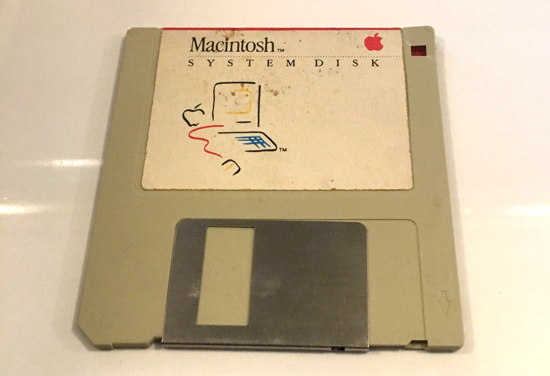
Macintosh System Disk 1984
Macintosh System Disk (690-5003A), 3.5-inch floppy containing System 1.0 (0.97) / Finder 1.0

Macintosh System 1 boot
Macintosh System 1.0 boot. The sound of a chime and a smiling Macintosh ensure that the hardware is in order and the boot process is successfully completed.

Macintosh System 1, welcome splash
Macintosh System 1.0 welcome splash

Macintosh System 1, 1984
Macintosh System 1.0 desktop

Macintosh System 1, icons
Macintosh System 1.0, some icons by Susan Kare

A Guided Tour of Macintosh
"A Guided Tour of Macintosh", 3.5-inch floppy disk (690-5002A) and 33 min. audio tape. Recording tape was identical on both sides.

Macintosh System 1, guide tour - A
Macintosh System 1, guide tour - B
Macintosh System 1, guide tour - C
Macintosh System 1, guide tour - D
Macintosh System 1, guide tour - E
Macintosh System 1, guide tour - F
"A Guided Tour of Macintosh", some screenshots

Apple (Macintosh) by Andy Warhol 1985
Apple (Macintosh) from the Ads series by Andy Warhol (screen print on Lenox Museum Board, 1985)

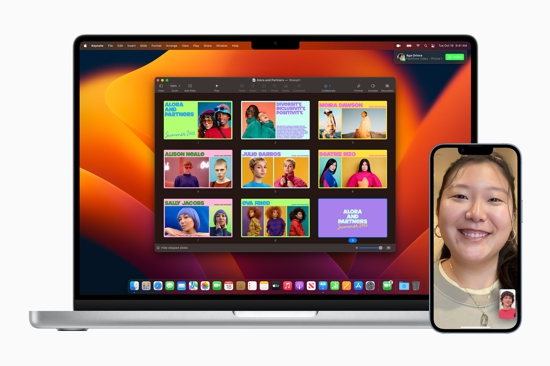
Macintosh Apple Mac OS 13 Ventura 2022
Apple Mac OS, an advanced version (13.2 - "Ventura", 2022)

You might also like:
--- Apple (Personal Computer)